
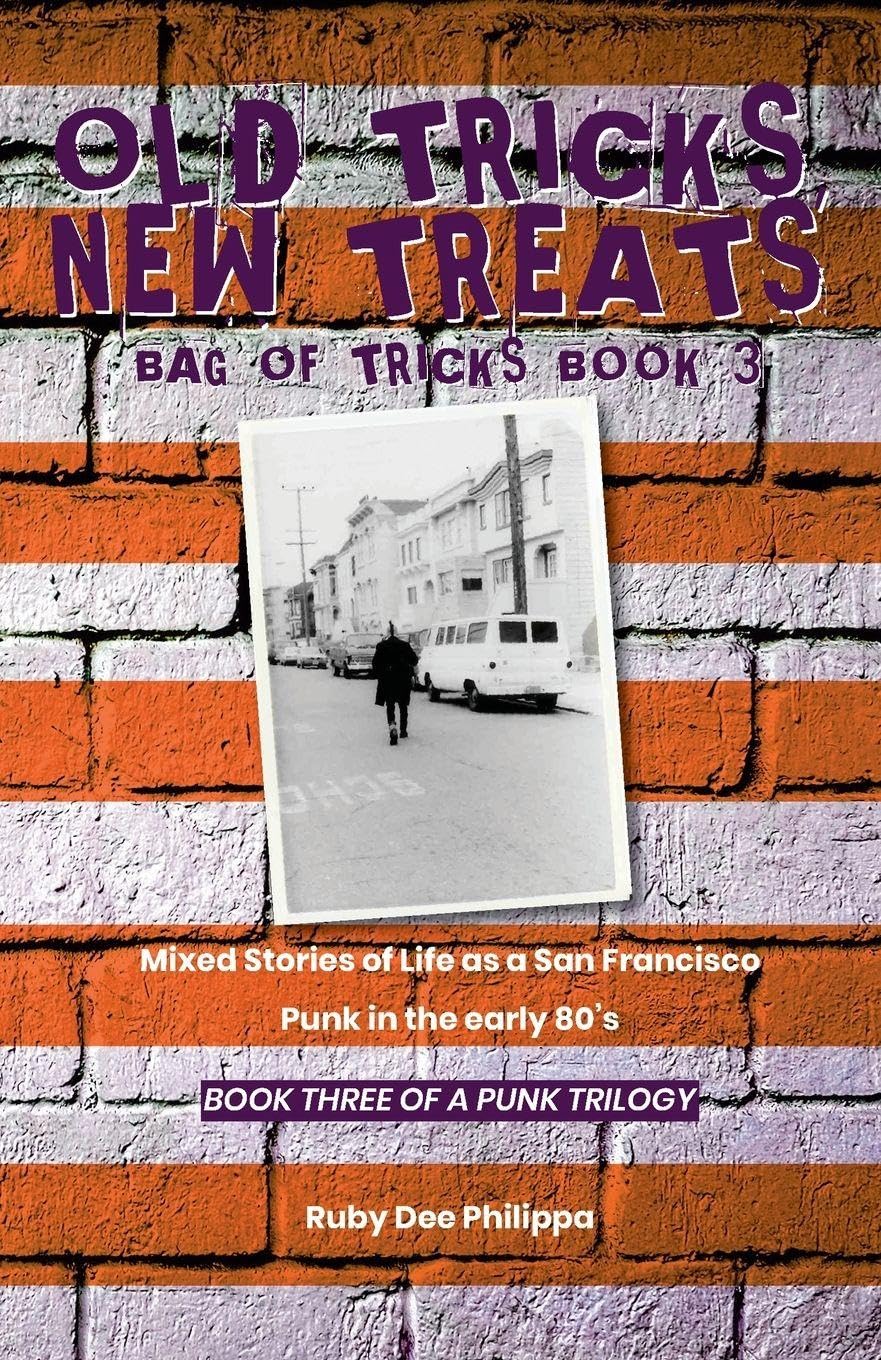
OLD TRICKS, NEW TREATS is book three of the BAG OF TRICKS trilogy: a compilation of short stories about San Francisco punks in the early 80’s.
- What first drew you into the San Francisco punk underground of the late ’70s and early ’80s?
I fell into the punk scene there by chance. I was hanging out around the edges of the art/music punk scene in San Diego and had the opportunity to move to San Francisco where some of my cohorts were also trekking to for various reasons. I quickly immersed myself in going out to every show and every event I heard about and voila, I was in it. What drew me there was how different the voices were from what you saw in magazines, on TV and for me, on the beaches in San Diego. What they were saying (in conversations, in songs, in writing) struck me more deeply than anything else around at the time. I had to find out what that was all about. - – How accurately do you feel Old Tricks, New Treats captures the spirit of that scene?
Old Tricks, New Treats is actually more about how- for so many- that scene started to fall apart. The book is part three of the BAG OF TRICKS Punk Trilogy, so in those first two books, you find more of the joie de vivre and anger and angst, but so much of the fun and creativity and innocence that so many of us experienced in the early years of punk. Old Tricks, New Treats touches on the dissolution of some of that for the characters in the stories- how people fled once things got hard, how there were deaths from drugs and diseases and people doing harm to one another. There is more connection to mortality and what comes next if you don’t continue to live that punk life in this third book. But of course, there is still some of the grit and glam of the streets from the time 🙂 - – Punk is often romanticized—what truths were you determined to reveal?
I think that society at large looked at punks and thought, “Oh, scary and alien and weird” But in truth, we were all people, just like they were- maybe with different ideas and ideals but the same hopes, desires and feelings as anyone else. We just went about it differently- trying to muddle our way through the questions we all ask ourselves. Also, yes it was dangerous at times, and dirty. Yes, we were often estranged from our families and one another. But in the end, we really created something there. We had communities that looked out for one another. We created and built something that has lasted, for many of us, through the years. Not just the music and the memories, but the friendships and the ability to dig down inside and stand up for things we believe in. - – How did alienation, art, and rebellion coexist in those years?
Certainly, there were artists who had existed outside the norm of society before. We had our Anais Nins, Ginsbergs, Kerouac’s, Rimbaud’s, and more to look to as inspiration and to guide us along our own uncharted paths in art, in life. So how does any of that coexist ever? You feel like you don’t fit into the society around you. You start to express yourself on your own in whatever ways transpire from within- poetry, prose, lyrics, music, painting, photography, other forms of expression. You slink and skulk around the edges of society and you find others doing the same, who are like-minded. You start bands together or magazines, or build an art cooperative where other people like you can show their art. I think the timing was right politically as well as culturally in the world, and we all responded in kind. Then we found each other and moved forward from there. - – Which clubs or bands most defined that era for you?
I wish I could remember the clubs I went to in San Diego when I was 15 and could get into shows there. Rosie Flores was doing her thing with her band the Screamers. I loved the rhythmic sounds of Gang of Four, of course the poetry and lyricism of X, and many other bands that made me sit up and pay attention to other ways I could speak up: The Germs, Black Flag, The Sex Pistols, The Clash, Blondie, The Ramones. Once I turned 16 and had a license, I used to drive up to LA, go to shows at the Whiskey, sleep in my car afterwards, wash up with someone’s garden hose the next morning and drive back to San Diego. I remember a lot more cross-cultural stuff going on in those early days too: there were more women performing, more Latinos and Black folks. There was more experimentation going on, which was interesting and fun.
Old Tricks, New Treats (Bag of Tricks, book 3) by Ruby Dee Philippa (Author)
About: OLD TRICKS, NEW TREATS is book three of the BAG OF TRICKS trilogy: a compilation of short stories about San Francisco punks in the early 80’s. Follow the adventures of The Shits, Val, Sophie, Babs, Carla, Red, Marco, Bags and all the rest of the rag-tag gang of street punks that populate these stories. Ride with them as they hit new highs and lows, make mostly bad and occasionally good choices, and aim for uncharted lives in the end.
Link – https://amzn.to/4oFYSzL
About the Author
Ruby grew up in the foothills of Northern CA and the West Texas flatlands, riding horses in the back woods near Folsom Prison, and singing with family on the back porch. She attended SDSU at fifteen- studying electrical engineering and drama- then stumbled into life on the streets of San Francisco, enchanted by all the grime and glitz, the drugs and wild nights, even the discordance and insanity of life as a punk in those early days. Moving on, Ruby co-founded the North Coast California Earth First! in Arcata, CA while attending Humboldt State, and fished across Alaskan waters. Eventually, she moved to Seattle, WA where she opened a series of restaurants, then transitioned from restaurateur to singer/songwriter when she started the roots-rockabilly band Ruby Dee and the Snakehandlers in 2002. Thrice Grammy-considered, they tour the world and produce award-winning records. In 2023, Ruby wrote Bag of Tricks after reconnecting with old punk friends and reminiscing about those lost years. Most of what she wrote came from events that really occurred, though Ruby took liberties and changed some details because she could. Find more at https://www.rubydeephilippa.com/