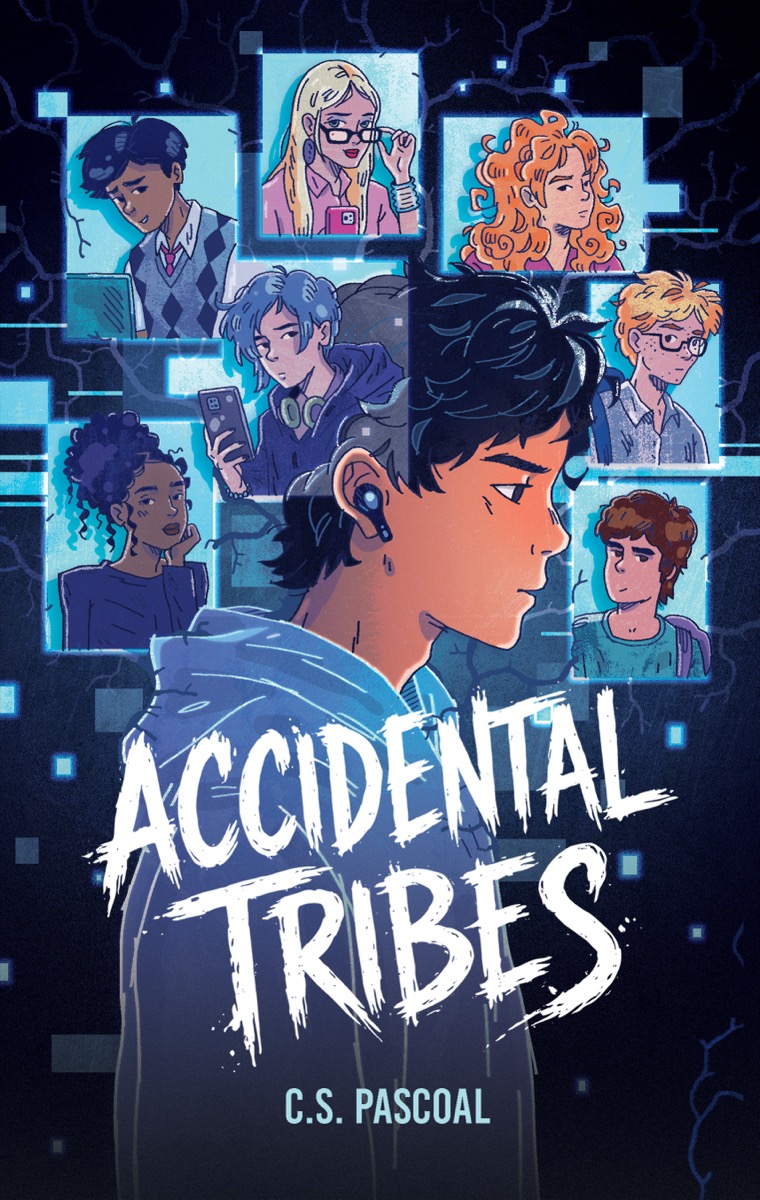
What happens when a teenager’s reputation is decided before anyone knows the whole story? C. S. Pascoal talks about the questions that sparked her young adult mystery Accidental Tribes and why she chose suspense to explore them.
What first sparked Accidental Tribes?
Accidental Tribes grew out of questions that connect my life as a mother with my work in technology: What are we giving young people, and what are we asking them to navigate before they have the tools to understand it? I’m raising a teenage son, so questions about purpose, friendship, and technology are part of my everyday life.
I wanted to explore what it means to become yourself when so many forces are competing to define you. Teen identity development unfolds alongside expectations from school, family, friends, and the online world. Somewhere inside all that noise is a young person trying to understand what they believe and what they have to offer. That deserves a story with depth, adventure, and room for discovery.
Was there a real-world moment that made you want to write about teens, tech, and belonging?
The concern behind Accidental Tribes was larger than one incident. Young people are developing their sense of self in environments where other people can label them publicly, instantly, and sometimes falsely, with no undo button. I wanted to explore what happens when everyone has already decided who you are.
What interests me is how those judgments enter everyday life. A teenager can walk into a room and wonder what everyone has seen, heard, or assumed. Even silence can become difficult to interpret. Writing the novel gave me a way to examine that uncertainty from the inside, while also exploring the relationships that might help someone move beyond it.
Why did this story need to be told as a mystery?
Mystery gave the questions in Accidental Tribes urgency. It also keeps the reader engaged. I wanted to deliver a story teens wanted to read instead of a lecture. The characters have something to uncover, and readers have a reason to keep turning pages while discovering the people beneath the reputations.
A mystery asks readers to pay attention, form an interpretation, and remain open to being wrong. Those habits connect naturally to the book’s themes. When a new detail changes the meaning of an earlier moment, readers experience how incomplete their first understanding was. That discovery can happen through suspense and curiosity, which makes it part of the pleasure of reading.
The Children’s Book Review described Accidental Tribes as “Fast-paced and compelling, perfect for teens who want fiction grounded in the realities of the twenty-first century.” That captures the balance I wanted: the pleasure of following a mystery alongside questions that remain relevant after the book is closed.
When someone is looking for page-turner YA books, the question is what will make them care enough to continue. With Accidental Tribes, I wanted suspense and emotional discovery to give readers reasons to keep going.
About the Author
C. S. Pascoal is a technology and social-impact entrepreneur and the author of Accidental Tribes. Based in New York City, she founded UnBoxMe and has worked at the intersection of technology, entrepreneurship, and social impact.
Book website · Instagram · TikTok · YouTube · LinkedIn